Commercial Pool Lighting in Texas: A Guide for Apartment, HOA & Community Pools
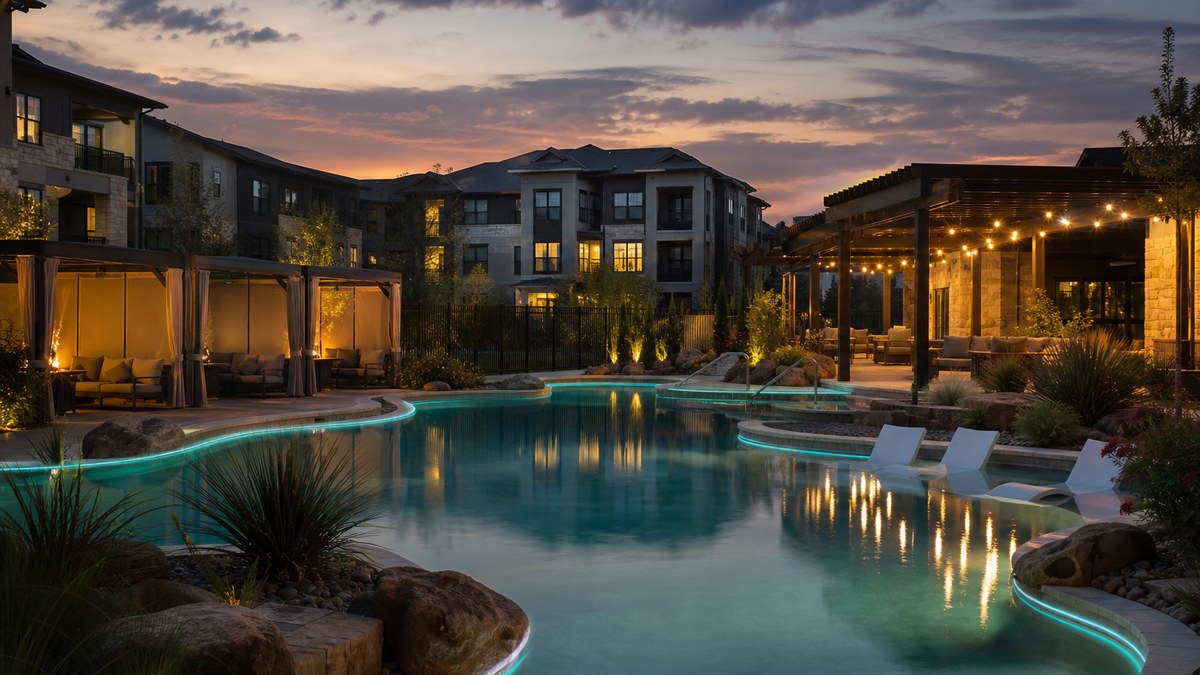
Commercial pool lighting in Texas is not only for hotels and resorts. Apartment complexes, HOA community pools, and condominium amenity decks are regulated as public or semi-public pools in Texas, and they face many of the same expectations: safe visibility at night, code-compliant electrical work, reliable equipment, and a look that helps the property compete for residents. For many communities, the pool is the most visible amenity on the property and the first thing prospective residents see on a tour.
This guide is written for property managers, HOA boards, owners, and developers. It explains what community pools need from their lighting, how fiber optic and LED options compare, how to plan an upgrade around the swim season, what to ask contractors, and how to keep pool lighting safe and reliable for years.
Apartment and HOA pools in Texas are treated as public or semi-public pools, so lighting must support safety, inspections, and code-compliant electrical work.
- Visibility: light the pool bottom, steps, and deck so people and staff can see clearly at night
- Safety: fiber optic lighting puts no electricity in the water; LED fixtures must be installed and bonded to code
- Curb appeal: perimeter glow, lit water features, and warm deck lighting make the amenity stand out
- Reliability: commercial-grade components, protected equipment areas, and simple controls
- Timing: plan upgrades for the off-season or a scheduled renovation
- Pricing: project-specific, based on pool size, design and site conditions
Why community pool lighting matters
For apartment communities and HOAs, pool lighting does several jobs at once:
- Resident safety: well-lit pools and decks reduce trips, help people see the pool bottom and steps, and make supervision easier.
- Compliance: lighting is part of what inspectors look at, and electrical safety around water is critical.
- Leasing and property value: a pool that glows at dusk photographs beautifully for listings and impresses on evening tours.
- Longer amenity use: good lighting lets residents enjoy the pool area into the evening during long Texas summers, within posted hours.
- Security: lit gates, fences, and decks discourage after-hours trespassing.
Texas rules: what makes a pool "commercial"
In Texas, pools at apartment complexes, HOAs, condominiums, hotels, clubs, and similar properties are generally treated as public or semi-public pools rather than private residential pools. State rules administered by the Texas Department of State Health Services (Texas Administrative Code, Title 25, Chapter 265) and local health departments set requirements for operation and safety, while the National Electrical Code (Article 680) and local building codes govern electrical work around pools.
For lighting, that typically means attention to:
- Adequate underwater and deck illumination for pools used after dark
- Electrical safety: fixture types, bonding, GFCI protection, and equipment locations
- Lighting for walkways, steps, and exits
- Permits and inspections for electrical work
Requirements change and can vary by city and county, so always confirm current rules with your local health department and authority having jurisdiction, and use licensed professionals. This guide is general information, not legal or code advice.
If your community is weighing an upgrade, start with a simple night walk of the pool area during open hours. Note where it is hard to see the bottom or steps, where the deck feels dark, which features disappear after sunset, and how the pool looks from the leasing office or clubhouse. Those notes, plus a few photos, give any lighting designer what they need to recommend the right mix of fiber optic, LED, and deck lighting for your property.
Fiber optic vs LED for community pools
Most community pools use one or both of two technologies.
LED pool lights
LED fixtures mount in niches in the pool wall and provide bright, general underwater light. They are a familiar choice and work well for replacing older incandescent or halogen fixtures in existing niches. Because they are electrical fixtures in the water, installation, bonding, and maintenance must follow code carefully, and servicing a fixture means working at the pool wall.
360° laser fiber optic lighting
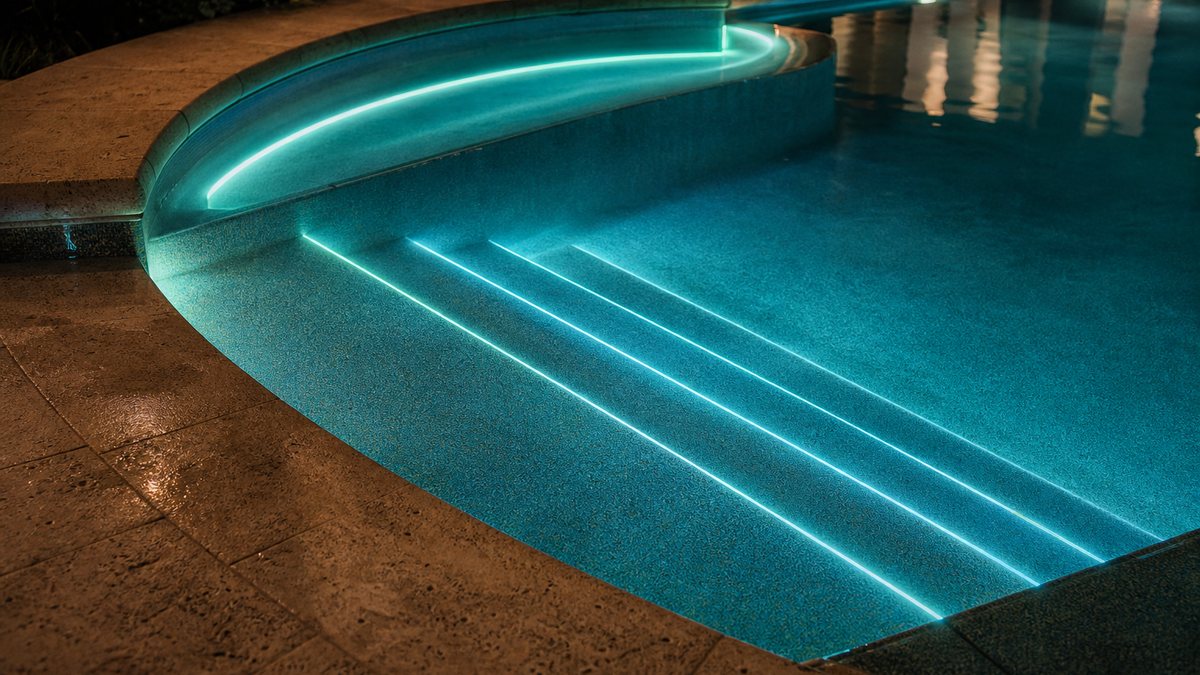
Fiber optic lighting carries only light to the pool. The 360° system uses a patent-pending laser source in a remote, dry equipment area to light side-glow fiber evenly along its full length, outlining pool edges, steps, benches, spas, and water features in continuous color. There is no electricity in the water, the fiber produces no heat, and service happens at the laser unit rather than in the pool. The technology won Best New Product at LDI 2024 and runs 200+ meters from a single source.
| Factor | LED pool lights | 360° laser fiber optic |
|---|---|---|
| Electricity in the water | Yes, in wall niches | None |
| Look | Bright pools of light | Continuous glowing outlines |
| General brightness | Strong | Best as outline and feature lighting |
| Where service happens | At the pool wall | Dry, remote laser unit |
| Steps, benches, edges | Limited | Excellent |
| Water features | Spot fixtures | Outlines and continuous color |
| Common approach | General pool light | Perimeter, steps and features |
Many communities get the best of both: LED for general underwater brightness and fiber optic for perimeter, steps, and features. Read our full comparison in fiber optic vs LED pool lighting.
Lighting every part of the pool area
Pool perimeter and coping
A glowing outline defines the pool edge at night, improving safety and creating the signature look that photographs well for leasing. Side-glow fiber sits in a track under the coping lip.
Steps, benches and tanning ledges
Lighting step edges and benches helps residents see changes in depth and enter and exit safely.
Spas and hot tubs
Spa outlines and spillways add atmosphere and make spa edges easy to see.
Water features
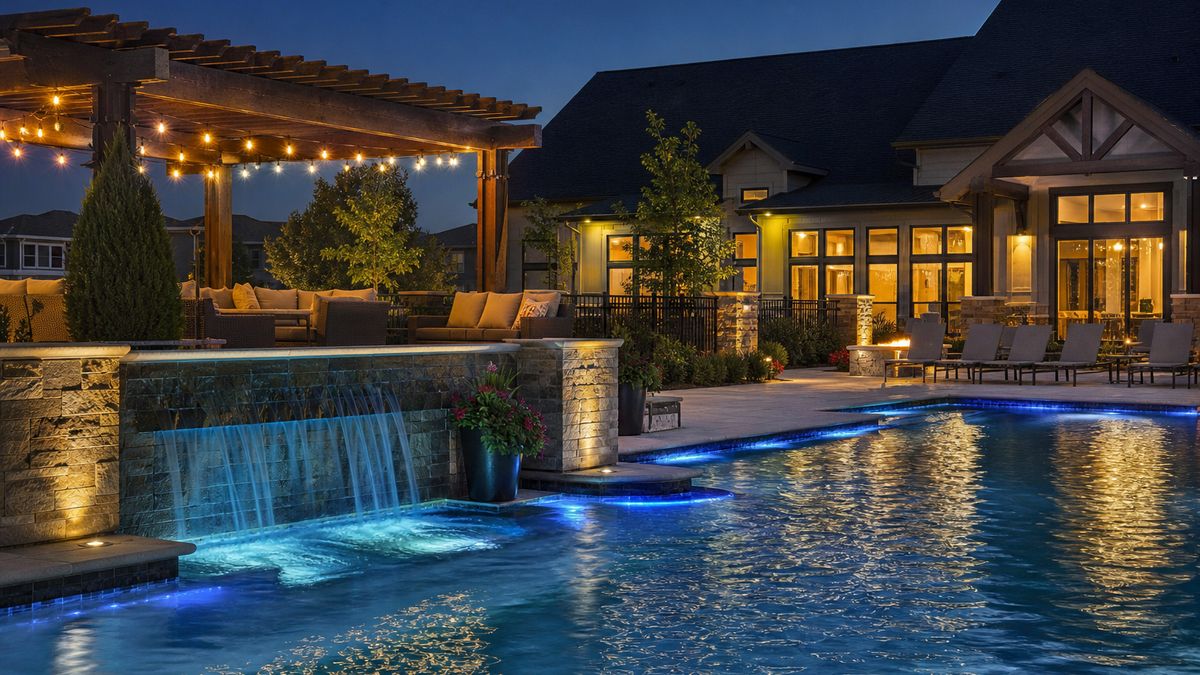
Fountains, bubblers, sheer descents, and splash features come alive with color, and fiber keeps electricity away from the water.
Deck, cabanas and grills
Warm, glare-free deck lighting, lit pergolas and cabanas, and task lighting at grills extend the amenity's appeal while keeping walkways safe.
Gates, fences and exits
Clear light at gates and exits supports safety and security, and helps staff check that the area is closed after hours.
Planning a pool lighting upgrade?
Send us photos or plans of your pool and we will recommend the right approach and prepare a project-specific proposal.
Planning an upgrade around the swim season
Timing is everything for community pools. Residents expect the pool to be open in summer, so the best windows for lighting work are:
- Off-season (late fall through early spring): the most common window for retrofits.
- Scheduled renovations: replastering, retiling, or coping replacement is the ideal time to add a fiber track or new niches.
- New construction: plan the fiber track, conduit, and equipment area before coping and decking go in.
Communicate with residents early, coordinate with your pool service company, and allow time for permits and inspections where required.
Retrofitting an existing pool
Many community pools can add fiber optic lighting without major construction. Options include installing a track under the existing coping lip or using a low-profile surface track. Laser units go in a dry, ventilated equipment area such as the pump room, powered by a licensed electrician. For LED, existing niches can often accept compatible replacement fixtures, though bonding and wiring should be checked against current code. A site review shows which approach fits your pool, coping, and equipment layout.
Controls, schedules and color
Simple, reliable controls matter most for community pools, where staff and volunteers change over time:
- Schedules that turn lighting on at dusk and off at closing
- Preset scenes such as calm white, cool blue, or holiday colors
- Event modes for community gatherings and seasonal celebrations
- Simple local control so on-site staff can change scenes without training
Many properties keep a steady, comfortable color during regular hours and save color shows for special events, which keeps visibility consistent for swimmers.
Rooftop and urban pools
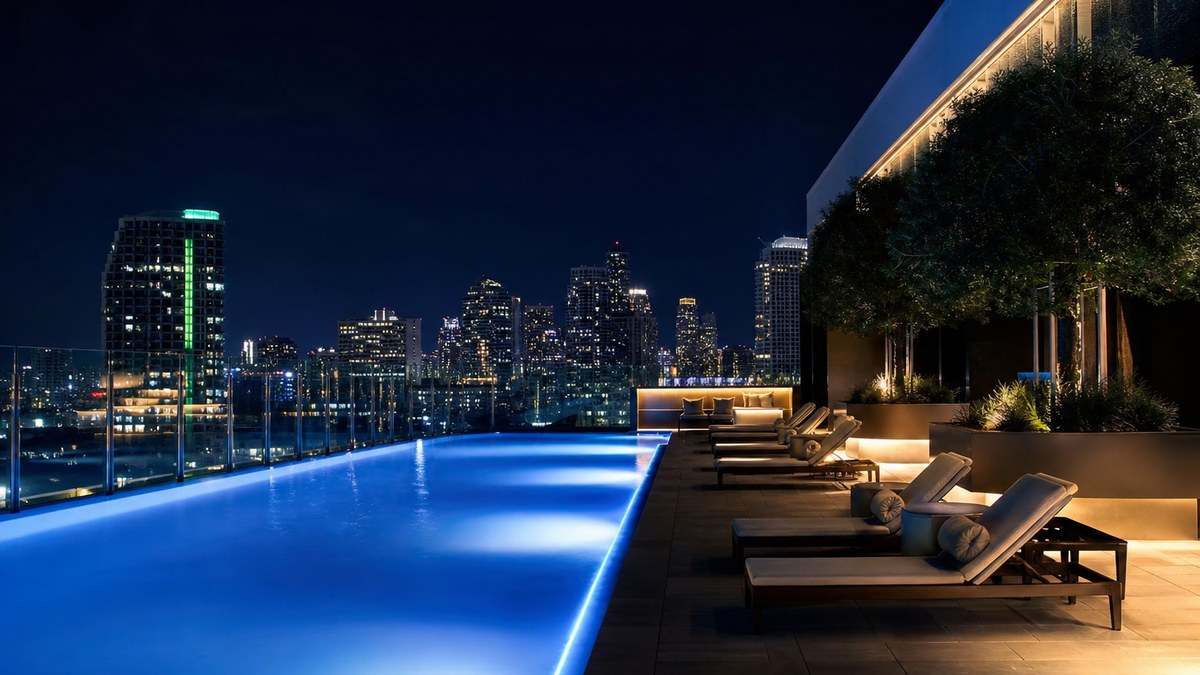
In Dallas, Fort Worth, Houston, Austin and other Texas cities, many new apartment buildings put the pool on a rooftop or podium deck. These pools are often the building's signature amenity and the backdrop for marketing photos against the skyline. Lighting them well means balancing drama with comfort: fiber optic outlines that glow against the city lights, warm lighting on lounges and cabanas, and careful glare control so neighbors and residents in the units above are not bothered. Equipment space on rooftops is often tight, so laser units and controls must be planned early with the architect and mechanical engineer.
Lighting for accessibility and comfort
Good pool lighting helps everyone, including older residents, children, and people with limited vision. Clearly lit steps and handrails, high-contrast edges, glare-free deck lighting, and consistent light levels across the pool area make it easier to move around safely after dark. Warm color temperatures on the deck feel comfortable, while the pool itself can stay a crisp, clear color during swim hours so the bottom and steps are easy to see.
Questions to ask pool lighting contractors
- Do you have experience with commercial and community pools, not just backyard pools?
- How will the work meet code, and who handles permits and inspections?
- Will a licensed electrician handle power to laser units and fixtures?
- Where will equipment be located, and how is it protected from water and heat?
- How will you phase the work around the swim season?
- What warranty applies, and who handles service?
- Can you provide photos or examples of similar pools?
Maintenance and reliability
Community pools run hard all summer, so plan for simple, regular care:
- Check that all lights and scenes work before the season opens
- Keep equipment areas dry, ventilated, and clear
- Clean fiber tracks and lenses of debris and mineral buildup
- Inspect after storms for water intrusion or damaged components
- Verify schedules after daylight saving time changes
- Keep a simple guide for staff on changing scenes and who to call for service
Fiber optic systems simplify much of this, because nothing electrical sits in the pool and service happens at the remote laser unit.
Budgeting for community pool lighting
Every pool is different, so pricing is project-specific. The main factors are pool size and shape, total length of edges and steps to outline, number of laser units or LED fixtures, water features, controls, equipment-area work, and whether the project is new construction or a retrofit. For HOAs, it often helps to plan lighting alongside other scheduled pool work so labor and disruption are shared. Current 360° Fiber system options are listed at 360 Fiber Lighting, and we prepare a full project proposal after reviewing your pool.
Why it pays to do it right
For apartment owners, a stunning pool at night is one of the most effective amenities for marketing and resident retention. For HOAs, it adds value for every homeowner and creates a gathering place for the community. Doing the lighting right the first time, with code-compliant work, reliable equipment, and a design that makes the pool look its best, avoids repeated repairs and inspection problems later.
Pool lighting for new developments
For developers building new apartment communities or master-planned neighborhoods, the pool amenity is a key marketing asset. Planning lighting during design lets the fiber track, conduit, and equipment area go in with the shell and coping, which is far simpler than adding them later. We work with developers, architects, landscape architects, and pool builders to integrate fiber optic outlines, water feature lighting, and deck lighting into the amenity design, so the pool looks spectacular in leasing photos and on opening day.
Coordinating pool lighting with the rest of the amenity, including clubhouse exteriors, landscape lighting, and parking, creates a consistent look across the property. Our lighting network can support those areas too, from commercial LED lighting in Dallas to landscape and outdoor lighting in Irving.
Common mistakes to avoid
- Replacing like-for-like without a plan. Swapping old fixtures one at a time misses the chance to improve visibility and appearance.
- Party lighting during swim hours. Bright color shows look great but can make it harder to see swimmers; keep visibility first during open hours.
- Equipment in the wrong place. Laser units and power supplies need dry, ventilated locations away from splash and chemicals.
- Skipping the deck. A lit pool with dark walkways creates trip hazards and looks unfinished.
- No staff instructions. If on-site staff do not know how to run the system, lights end up on the wrong scene or off entirely.
Frequently Asked Questions
Are apartment and HOA pools considered commercial pools in Texas?
What lighting does a community pool need?
Is fiber optic lighting allowed in commercial pools?
Can fiber optic lighting be added to an existing HOA pool?
When is the best time to upgrade community pool lighting?
How much does community pool lighting cost?
Should community pools use colored lights?
Who should install pool lighting?
Do you work outside the Dallas-Fort Worth area?
Let's light your community pool
Call us or book a consultation and bring photos or plans of your pool.
Related
Our lighting network: 360° laser fiber optic lighting, fiber optic starlight ceilings, Fort Worth LED lighting, Arlington LED lighting, Plano LED lighting, statewide Texas LED lighting, wholesale LED components, modular building solutions, and Dallas modular structures.