Commercial Pool Lighting: Hotels, Resorts & Aquatic Centers
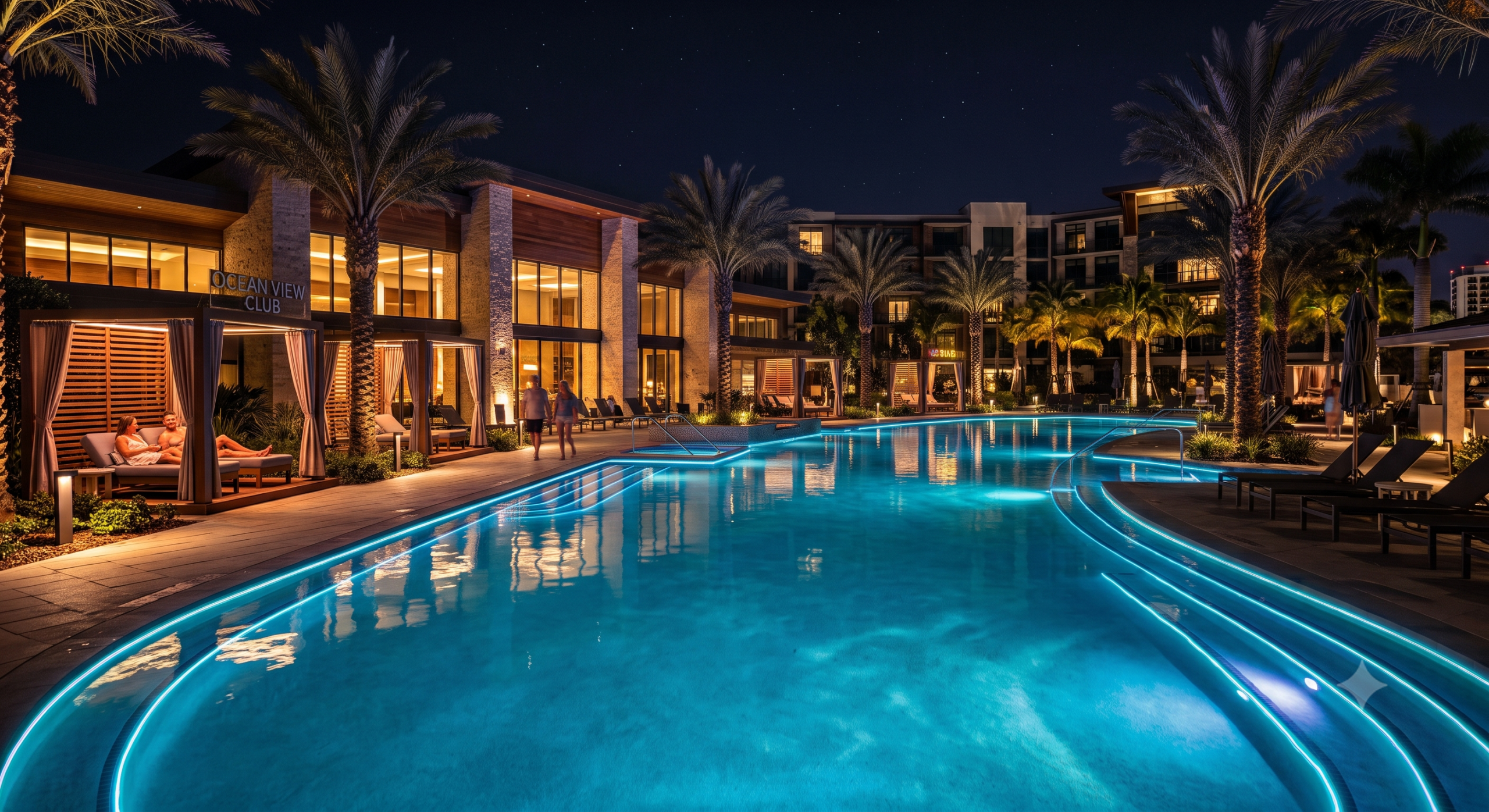
Commercial pool lighting is about far more than aesthetics. For hotels, resorts, apartment complexes, and aquatic centers, proper pool illumination is a safety requirement, a code compliance issue, and a guest experience differentiator—all at once.
The stakes are higher in commercial settings. Lifeguards need to see swimmers in distress. Health inspectors check illumination levels during facility audits. Guests judge your property by how the pool looks after dark. And energy costs for 24/7 operation add up fast with outdated lighting technology.
This guide covers everything facility managers, property owners, and hospitality operators need to know about commercial pool lighting in 2026: code requirements (including Texas-specific regulations), technology options, realistic costs, and how to choose the right system for your facility. Whether you're upgrading an aging hotel pool, building a new aquatic center, or bringing an apartment complex into compliance, you'll find actionable guidance here.
Quick Answer: What Is Commercial Pool Lighting?
Key Takeaways:
- Code compliance: Texas requires 8 lumens/sq ft minimum; ISPSC requires 30 foot-candles for indoor pools
- Safety first: Proper lighting helps lifeguards detect swimmers in distress—white light preferred
- Safest option: Fiber optic lighting puts zero electricity in the water—eliminates shock risk entirely
Why Commercial Pool Lighting Matters
Commercial pools operate under fundamentally different conditions than backyard pools. Higher bather loads, extended operating hours, regulatory oversight, and liability exposure all demand professional-grade lighting solutions.
Safety & Lifeguard Visibility
The primary purpose of commercial pool lighting is swimmer safety. Lifeguards and staff must be able to see every part of the pool—including all suction outlets on the bottom—at all times during operation. The Illuminating Engineering Society (IES) recommends 100 foot-candles at indoor pool surfaces and 60 foot-candles for outdoor pools. Deck areas should have 30–50 foot-candles for safe movement and emergency response.
Experts strongly recommend white light for commercial pools. Colored lighting may look impressive, but it can interfere with lifeguards' ability to quickly recognize a struggling swimmer. Save the color-changing shows for evening ambiance hours when lifeguards aren't on duty.
Code Compliance & Health Inspections
Commercial pools face regular health department inspections. In Texas, the Department of State Health Services (DSHS) enforces TAC Title 25, Chapter 265—the state's public pool regulations. Lighting deficiencies can result in failed inspections, mandatory closures, and liability exposure if incidents occur.
Common inspection failures include inadequate illumination levels, non-functioning fixtures, missing emergency lighting, and improper GFCI protection. Regular maintenance and proactive upgrades prevent these issues.
Guest Experience & Property Value
Beyond compliance, pool lighting significantly impacts guest perception. A beautifully lit pool becomes a property's signature feature—driving bookings, positive reviews, and premium pricing. Hotels and resorts increasingly use dramatic pool lighting as a marketing differentiator, especially for evening photography and social media presence.
Energy & Operating Costs
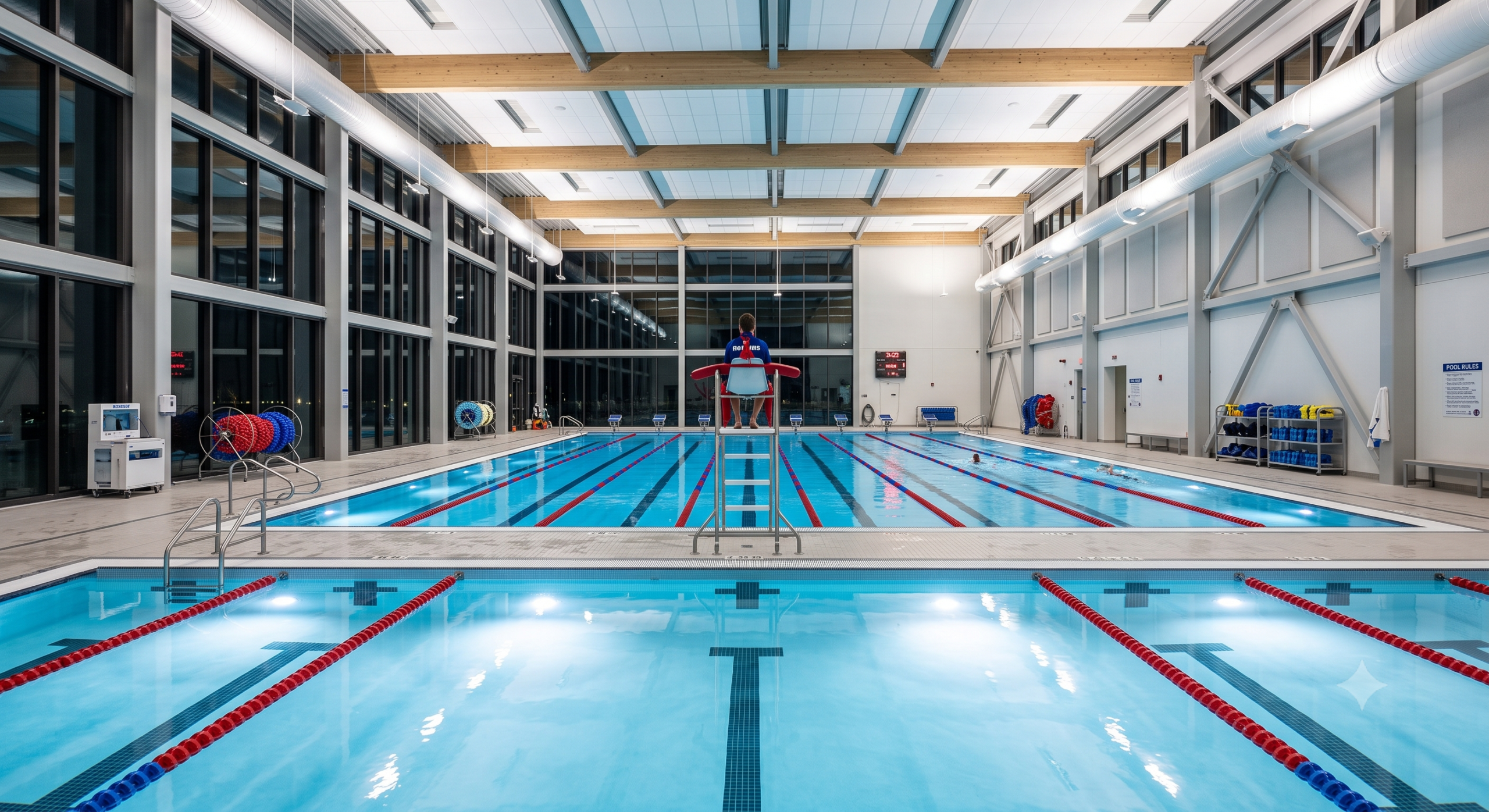
Commercial pool lighting codes and safety
Commercial pools, which in Texas include hotel, apartment, HOA, club and other public or semi-public pools, are regulated more strictly than private residential pools. State rules administered by the Texas Department of State Health Services and local health departments, together with the National Electrical Code (Article 680) and local building codes, set requirements for underwater and deck lighting, electrical safety, and inspections.
- Visibility: lifeguards and staff must be able to see the pool bottom and swimmers clearly at night.
- Electrical safety: underwater fixtures, bonding, GFCI protection and equipment locations must follow code.
- Deck and egress lighting: walkways, steps and exits need adequate light, often with emergency backup.
- Permits and inspections: lighting changes may require permits and inspection by the local authority.
Because requirements change and vary by jurisdiction, confirm current rules with your local authority having jurisdiction and work with licensed professionals. Fiber optic lighting helps simplify the electrical side, because no electrical components sit in the water.
Commercial Pool Lighting Technology Options
Today's commercial pool lighting market offers three primary technology categories, each with distinct advantages for different applications.
LED Pool Lighting
LED technology dominates the commercial pool market for good reason: energy efficiency, long life, and color-changing capability. Modern LED pool fixtures consume 75–90% less energy than incandescent equivalents while delivering equal or better illumination.
Best for: Budget-conscious upgrades, standard hotel/apartment pools, facilities prioritizing energy savings
LED Advantages:
- Lower upfront cost than fiber optic
- RGB color-changing options available
- 15,000–50,000 hour rated life
- Retrofit-compatible with many existing niches
- Smart controls and DMX integration available
LED Limitations:
- Electricity present in water (requires GFCI protection)
- Heat generation shortens life in pool environment
- Fixture access required for maintenance
- Seal failures can cause water intrusion
- Limited cable run lengths from transformer
Traditional Fiber Optic Pool Lighting
Fiber optic lighting separates the light source (illuminator) from the light delivery (fiber cables). Because only light—not electricity—travels through the fibers, these systems are inherently safer than any electrical alternative. Traditional fiber optic systems emit light from cable endpoints.
Best for: High-safety applications, starlight effects, accent lighting, facilities with concerns about electrical safety
360° Laser Fiber Optic Lighting
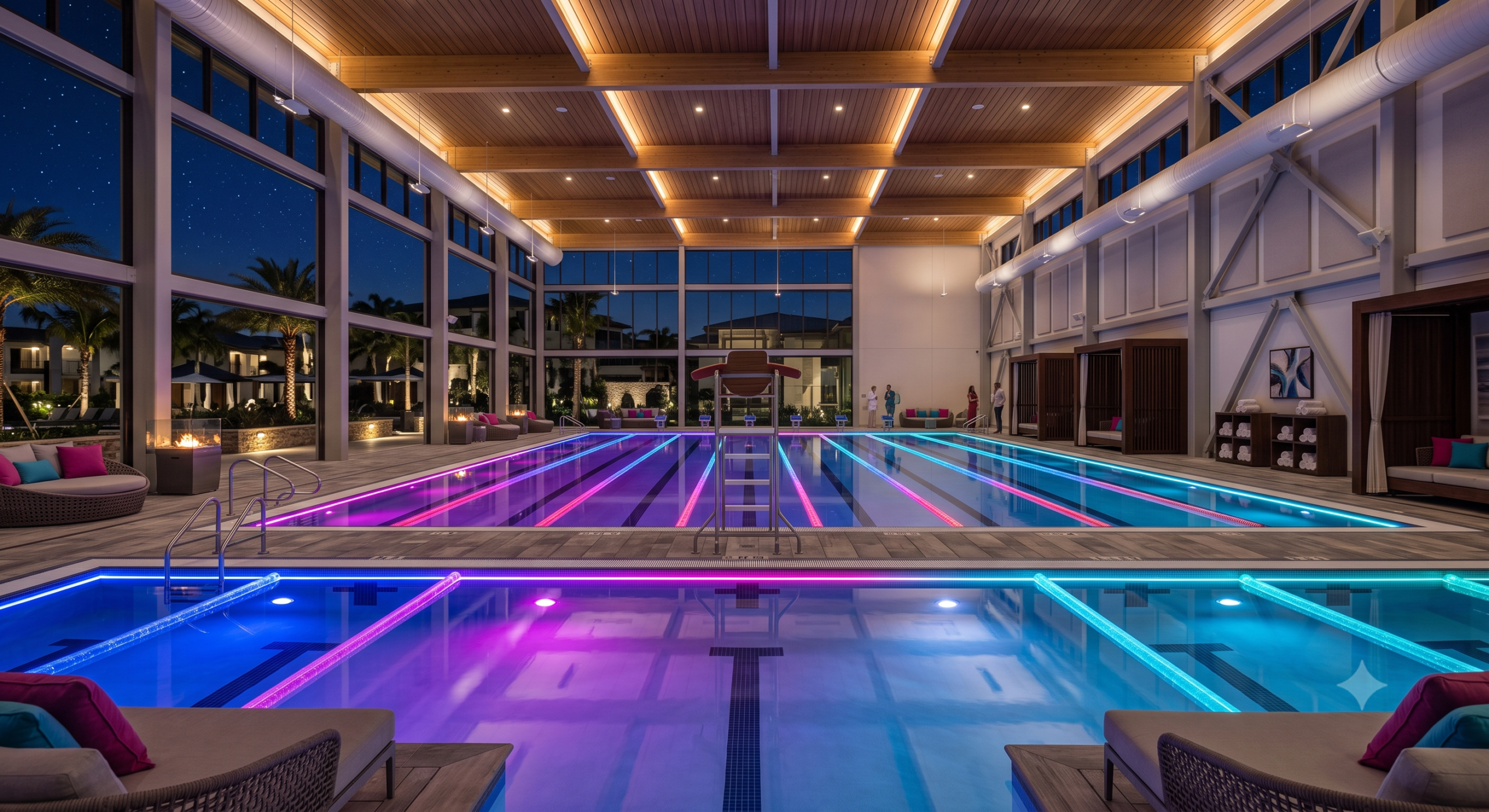
The most advanced pool lighting technology available today, 360° laser fiber optic systems illuminate the entire length of fiber cable—not just the ends. This patent-pending technology won Best New Product at LDI 2024 and represents a quantum leap over both traditional fiber optic and LED systems.
Best for: Luxury hotels and resorts, high-end residential, commercial facilities prioritizing safety and visual impact, aquatic centers requiring maximum safety
Why 360° Fiber Optic Wins for Commercial:
- Zero electricity in water — Eliminates electric shock drowning (ESD) risk entirely
- 3x better color saturation — Laser-powered illumination delivers richer, more vibrant colors than any LED
- True 360° coverage — Entire cable surface glows; no dark spots or uneven areas
- 200+ meter cable runs — Single illuminator can power extensive installations
- Remote light source — All maintenance happens at the illuminator, not underwater
- Commercial-grade durability — Built for 24/7 operation in harsh pool environments
Planning a pool project?
Tell us about your pool or property and we will follow up with recommendations and a project-specific proposal.
Commercial Pool Lighting by Facility Type
Different commercial facilities have distinct lighting requirements based on use patterns, guest expectations, and operational considerations.
Hotels & Resorts
Hotel pools serve dual purposes: daytime recreation and evening ambiance. The best systems provide bright white light for safety during supervised hours, then transition to dramatic color effects after lifeguard hours. Pool lighting often becomes the signature visual element in marketing photography and guest social media posts.
Recommended: 360° fiber optic for luxury properties; high-quality LED with color-changing for mid-tier hotels
Apartment Complexes & HOA Communities
Apartment and HOA pools operate under commercial codes despite their residential setting—a common source of confusion. These pools typically need reliable, low-maintenance systems that meet code requirements without excessive operating costs. HOA boards must budget for ongoing maintenance and eventual replacement.
Recommended: Commercial-grade LED systems for budget efficiency; fiber optic for communities prioritizing safety and reduced liability
Aquatic Centers & Municipal Pools
Recommended: High-performance LED systems for overhead lighting; fiber optic for underwater accent lighting where permitted
Water Parks & Entertainment Venues
Water parks demand dramatic visual impact across large areas with diverse water features. Lighting systems must integrate with complex control systems for synchronized shows and handle the unique challenges of wave pools, lazy rivers, and splash features.
Recommended: Combination systems—fiber optic for dramatic features and high-safety areas; commercial LED for general illumination
Country Clubs & Private Facilities
Country club pools serve demanding members who expect premium aesthetics and flawless operation. These facilities often justify higher investments in technology that delivers both visual impact and long-term reliability.
Recommended: 360° fiber optic for signature pools; coordinate with American Starlight Ceilings for poolhouse and cabana features
Commercial pool lighting costs
Pool lighting cost depends on the size and shape of the pool, the length of fiber or number of fixtures, how many laser units or LED lights are needed, controls, and installation conditions such as new construction versus retrofit. Commercial projects also depend on scheduling, code requirements and coordination with pool builders and electricians.
Premium Pool Lighting prepares a project-specific proposal after reviewing photos, plans or the site. Current 360° Fiber system options are listed at 360 Fiber Lighting. To start, book a consultation or call (702) 738-2218.
The Commercial Installation Process
Professional commercial pool lighting installation follows a structured process that minimizes facility disruption while ensuring code compliance and optimal performance.
Phase 1: Assessment & Design
The process begins with site assessment, code review, and custom lighting design. This includes photometric calculations, equipment specifications, coordination drawings, and project timeline development.
Phase 2: Permitting & Coordination
Commercial projects require permits from local building departments and often health department notification. Professional contractors handle permit applications, coordinate with facility operations, and schedule work to minimize pool closures.
Phase 3: Installation
Phase 4: Testing & Commissioning
Comprehensive testing verifies illumination levels, GFCI function, emergency backup operation, and control system performance. Light meter readings document code compliance for inspection purposes.
Phase 5: Training & Handoff
Staff training covers system operation, programming changes, basic troubleshooting, and maintenance procedures. Complete documentation supports ongoing facility management.
Frequently Asked Questions
What is commercial pool lighting?
How much does commercial pool lighting cost?
What are the Texas commercial pool lighting requirements?
Is LED or fiber optic better for commercial pools?
Are HOA and apartment pools considered commercial?
What is 360° fiber optic pool lighting?
How long do commercial pool lights last?
Can colored lights be used in commercial pools?
Do you install commercial pool lighting nationwide?
Ready to Upgrade Your Commercial Pool Lighting?
From code compliance assessments to complete lighting system installations, our commercial team delivers turnkey solutions for hotels, resorts, apartments, and aquatic facilities nationwide.
Free consultation • Code compliance verification • Nationwide installation
View Commercial Services Explore 360° Fiber Optic →Share This Guide
Help other facility managers discover commercial pool lighting solutions
Ready to talk about your property?
Tell us about your pool or property and we will follow up with recommendations and a project-specific proposal.
Related
Our DFW lighting network: Dallas commercial LED lighting, Fort Worth LED lighting, Arlington LED lighting, Irving LED lighting, Plano LED lighting, statewide Texas LED lighting, wholesale LED components, fiber optic starlight ceilings, 360° fiber optic lighting, modular building solutions, and Dallas modular structures.