Fiber Optic vs LED Pool Lighting: The Complete 2026 Comparison Guide
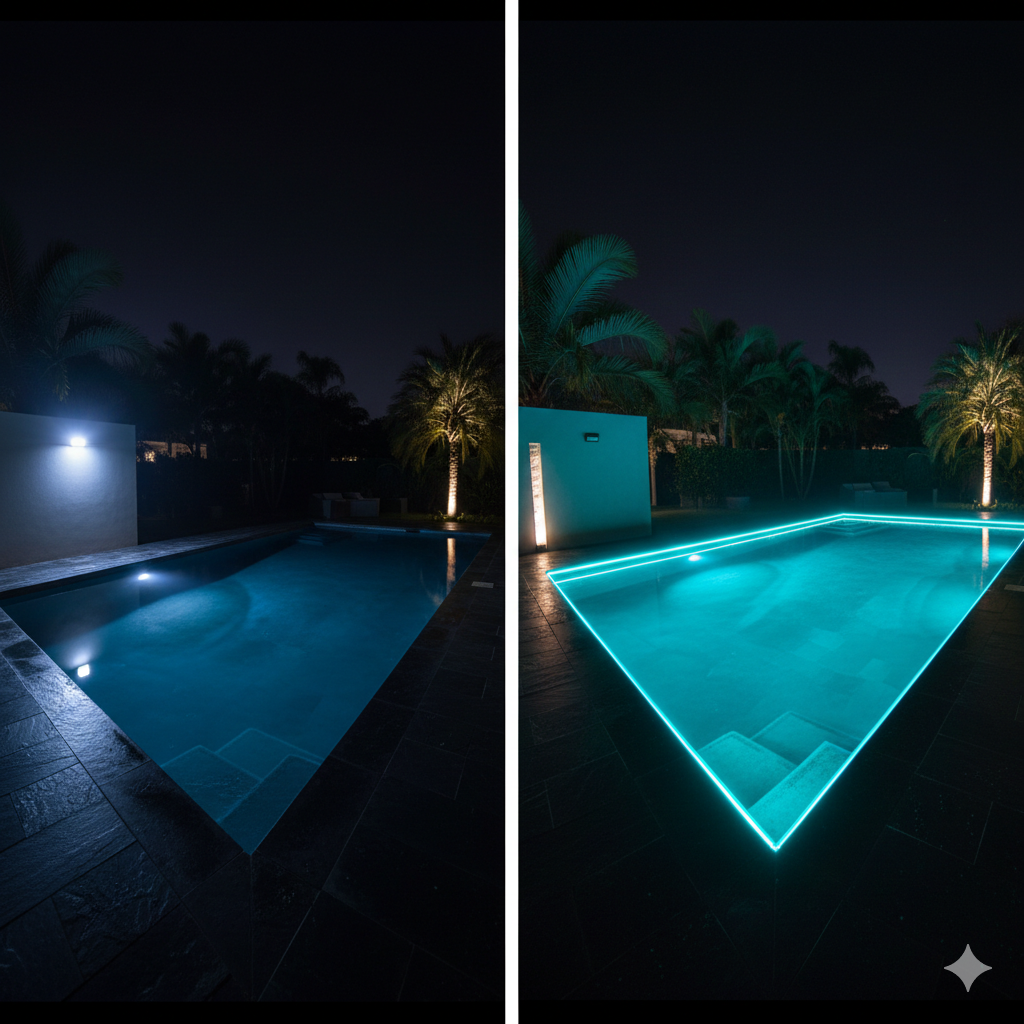
If you're researching pool lighting options, you've probably noticed most articles push LED as the "obvious" choice. And for years, that advice made sense.
But here's what those articles aren't telling you: fiber optic technology has evolved dramatically. The old fiber optic systems from the early 2000s—dim, expensive, and complicated—are nothing like today's advanced laser-powered systems. In fact, the latest 360° fiber optic lighting technology just won Best New Product at LDI 2024, the lighting industry's biggest trade show.
So which is actually better for your pool in 2026? In this guide, we'll break down the real differences between fiber optic and LED pool lights—covering safety, brightness, cost, lifespan, and installation—so you can make an informed decision. Spoiler: the answer depends on what you value most.
Quick Answer: Fiber Optic vs LED Pool Lighting
LED pool lights are more affordable upfront ($700–$1,500 installed) and provide bright illumination for most residential pools. Fiber optic pool lights cost more initially ($1,300–$2,000+) but offer superior safety (zero electricity in water), better color saturation, and unique design flexibility. For luxury pools, commercial installations, or anyone prioritizing safety, modern fiber optic systems—especially 360° laser fiber optic technology—are the premium choice.
Key Takeaways:
- Safest option: Fiber optic (zero electrical current in the water)
- Best value: LED (lower upfront cost, long lifespan)
- Best color quality: 360° laser fiber optic (3x better saturation than LED)
- Easiest maintenance: Fiber optic (bulb/source outside the pool)
- Best for luxury/commercial: Fiber optic (design flexibility, wow factor)
What Is LED Pool Lighting?
LED (Light Emitting Diode) pool lights are the most common choice for residential pools today. The technology uses semiconductor chips that emit light when electrical current passes through them.
Here's how they work: The LED fixture is installed in a niche (housing) built into your pool wall during construction. The light bulb sits underwater, sealed in a waterproof housing to prevent electrical contact with the pool water. A cord runs from the fixture through conduit to your electrical panel.
LED pool lights became popular because they offered a major upgrade over old incandescent bulbs—better energy efficiency, longer lifespan, and color-changing options. Brands like Pentair, Hayward, and Jandy dominate this market. If you're looking for commercial LED lighting solutions in Dallas or anywhere in the DFW area, LED technology has become the standard for most applications.
Pros of LED Pool Lights
- Lower upfront cost: $700–$1,500 installed for most residential pools
- Bright illumination: Excellent for lighting up large pool areas
- Long lifespan: 20,000–30,000 hours (10–15 years typical use)
- Energy efficient: Uses 80% less energy than incandescent bulbs
- Color options: RGB color-changing available on most models
- Widely available: Easy to find parts and service technicians
Cons of LED Pool Lights
- Electricity in the water: Even low-voltage LEDs have electrical current near swimmers
- Limited design flexibility: Must install in pre-built wall niches
- Heat generation: LEDs produce heat that can stress seals over time
- Bulb replacement complexity: Requires removing the entire fixture from the pool wall
- Fixed positioning: Can't easily reposition lights after installation
- Visible fixtures: Niches and housings are visible in pool walls
What Is Fiber Optic Pool Lighting?
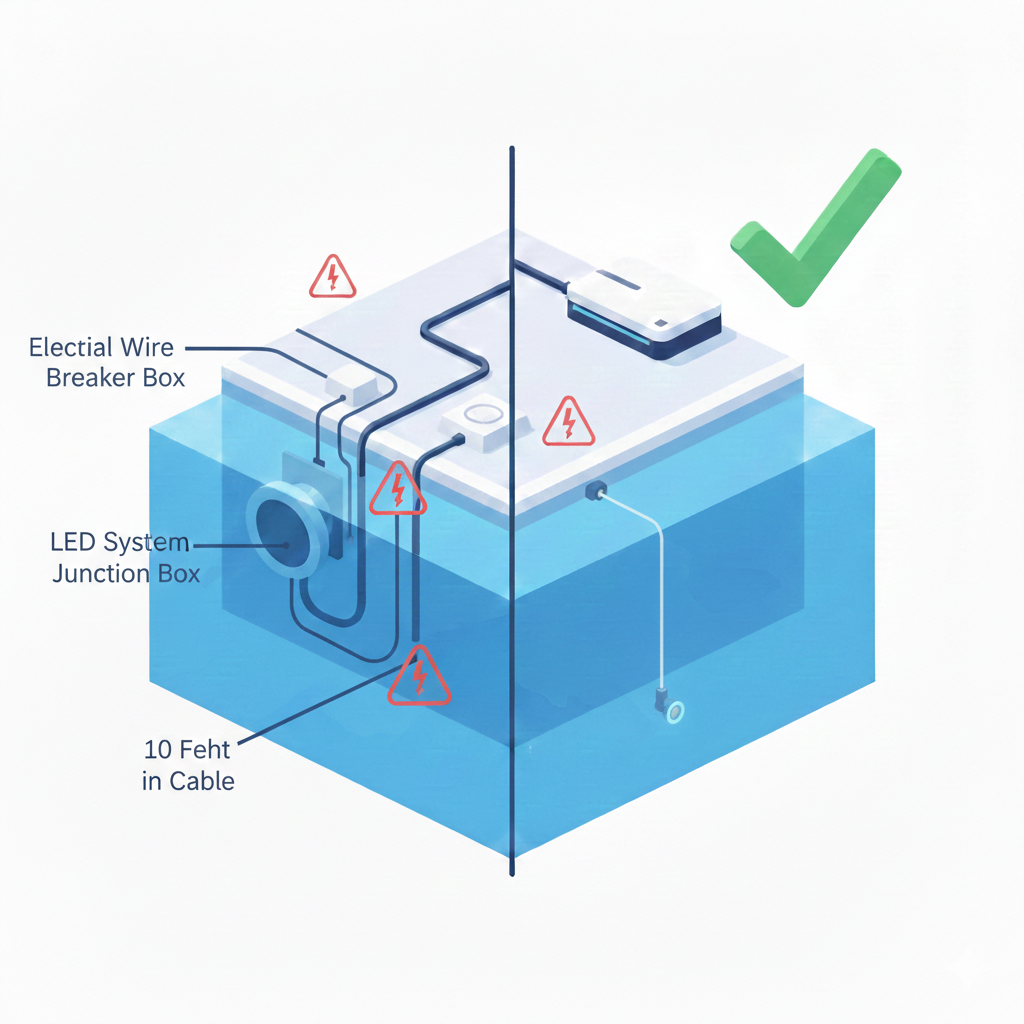
Fiber optic pool lighting works on a completely different principle. Instead of putting the light source in the water, fiber optic systems keep all electrical components in a dry box (called an illuminator) located outside the pool—typically on the deck or in an equipment area.
Light travels from the illuminator through flexible fiber optic cables into the pool. The cables themselves contain zero electricity—only light passes through them. This makes fiber optic the safest pool lighting technology available.
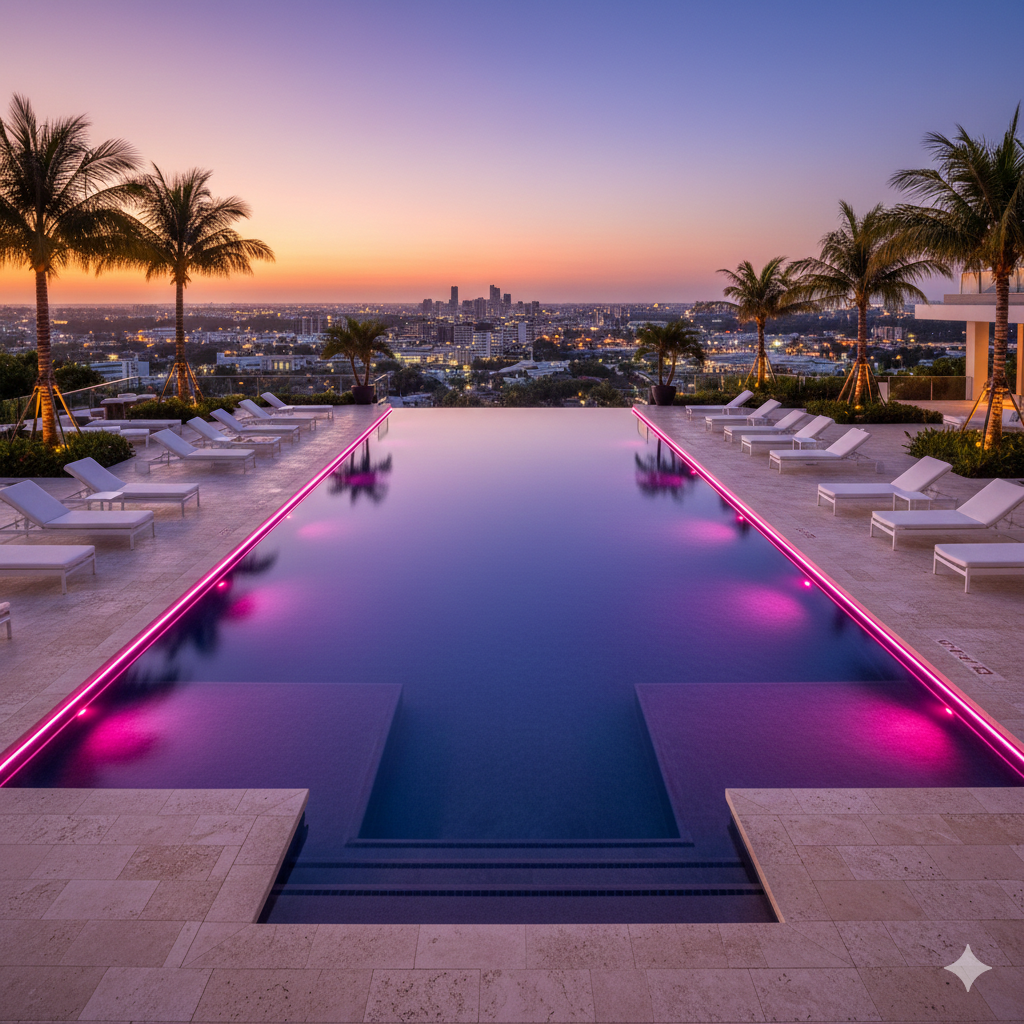
Traditional fiber optic systems emit light from the end of the cable only, which limited brightness and applications. But modern systems have changed everything. The revolutionary 360° Laser Fiber Optic Lighting System uses patent-pending laser technology to illuminate along the entire length of the cable with true 360-degree coverage—no dark spots, no uneven lighting.
Pros of Fiber Optic Pool Lights
- Ultimate safety: Zero electricity in the water—the safest option available
- Superior color quality: 360° laser systems deliver 3x better color saturation than LED
- Design flexibility: Cables can be bent, shaped, and installed almost anywhere
- Easy maintenance: Bulb/laser source is outside the pool—accessible in minutes
- No heat in water: Fiber cables produce zero heat
- Long cable runs: Modern systems run 200+ meters from a single light source
- 100% waterproof: No seals to fail because there's no electrical housing underwater
- Invisible installation: Thin cables are nearly invisible vs. bulky LED niches
Cons of Fiber Optic Pool Lights
- Higher upfront cost: $1,300–$2,000+ for traditional systems; $8,000–$15,000+ for premium 360° systems
- Illuminator placement: Requires space within 10–12 feet of pool (or custom cable lengths)
- Traditional systems less bright: Older end-lit fiber systems can't match LED brightness (but 360° laser systems exceed LED)
- Fewer contractors familiar: Not as commonly installed as LED, so finding experienced installers may take more effort
Head-to-Head Comparison: Fiber Optic vs LED Pool Lighting
Let's break down the key factors side by side. This comparison focuses on modern systems—including the latest 360° laser fiber optic technology—not outdated equipment from 20 years ago.
Safety Comparison: Why Fiber Optic Wins
Let's be clear: modern LED pool lights are generally safe when properly installed. They use low voltage (typically 12V), sealed housings, and GFCI protection. Tens of thousands are installed every year without incident.
But "generally safe" isn't the same as "inherently safe."
LED pool lights still place electrical components in the water. Seals can degrade over time. Improper installation happens. Older pools may have outdated wiring. While rare, electrical incidents in pools do occur—and they can be fatal.
Fiber optic eliminates this risk entirely. There is literally zero electricity in the fiber cables. All electrical components stay in the illuminator box, safely located outside the pool on your deck or in an equipment room. Only light travels through the cables into your pool.
This makes fiber optic the clear choice for:
- Families with young children
- Commercial pools and aquatic centers (liability concerns)
- Hotel and resort pools with high guest volume
- Anyone who wants absolute peace of mind
For commercial properties especially, the liability difference matters. Premium Pool Lighting specializes in fiber optic and LED systems for hotels, resorts, apartment complexes, and aquatic centers nationwide—and we consistently recommend fiber optic for commercial applications where safety and liability are paramount.
Brightness and Color Quality: The 360° Advantage
One of the biggest knocks against traditional fiber optic pool lights was brightness. Older systems that only emit light from the cable ends simply couldn't compete with the lumens output of a good LED fixture.
That's no longer true.
The 360° Laser Fiber Optic Lighting System uses patent-pending laser technology that illuminates along the entire length of the cable—not just the ends. This creates uniform, brilliant illumination with no dark spots.
Even more impressive is the color quality. Traditional LED pool lights offer decent color-changing effects, but laser-powered fiber optic delivers 3x better color saturation. The difference is visible immediately: deeper blues, more vibrant purples, richer reds. If you've ever been underwhelmed by how "washed out" LED colors look underwater, fiber optic is the solution.
This technology is so impressive that Genesis selected it for their luxury 2026 GV80 vehicle campaign. When automotive innovation leaders need cutting-edge lighting, they choose 360° fiber optic technology.
Pool Lighting Costs: What You'll Actually Pay in 2026
Let's talk real numbers. Pool lighting costs vary significantly based on the type of system, your pool size, and installation complexity.
LED Pool Light Costs
- Small LED lights (Pentair MicroBrite, PAL 2000): $700–$900 installed
- Full-size LED lights (Pentair IntelliBrite, Hayward ColorLogic): $1,000–$1,500 installed
- Bulb replacement only: $50–$600 (some units require full fixture replacement)
- Professional installation labor: $50–$100/hour
Most residential pools need 1–2 LED lights. Pools over 30 feet typically require 2 lights for adequate coverage. So budget $1,400–$3,000 total for a typical LED pool lighting setup.
Fiber Optic Pool Light Costs
- Traditional fiber optic systems: $1,300–$1,700 installed
- 360° Laser Fiber Optic System (Residential): Starting at $7,995 (early bird pricing)
- 360° Laser Fiber Optic System (Professional Pool): $9,995 (includes 100 meters cable)
- 360° Laser Fiber Optic System (Commercial): $14,995+ (200 meters, DMX-compatible)
- Bulb/source replacement: $200–$400 for traditional; laser units last 30,000+ hours
Yes, premium fiber optic costs more upfront. But consider the total cost of ownership: no underwater fixtures to fail, no seals to replace, easy maintenance access, and exceptional longevity. For high-end residential pools and commercial installations, the ROI makes sense.
Looking for LED options at competitive prices? Our partners at Texas LED Lights offer wholesale LED solutions statewide, while Wiedamark LED specializes in industrial and commercial LED products.
Cost Comparison Table
| Cost Factor | LED Pool Lights | 360° Fiber Optic |
|---|---|---|
| Initial System Cost | $700–$1,500/light | $7,995–$14,995+ (complete system) |
| Typical Residential Total | $1,400–$3,000 | $8,000–$12,000 |
| Energy Cost (Annual) | $80–$150 | $40–$80 (laser units very efficient) |
| Bulb/Source Replacement | $50–$600 every 10–15 years | Minimal (30,000+ hour laser life) |
| Seal/Gasket Repairs | $65–$150 periodically | $0 (no underwater seals) |
Installation Considerations
LED Pool Light Installation
LED lights require a pre-built niche in your pool wall. For new construction, this is straightforward—your pool builder includes the niche during the shell construction. For existing pools without niches, adding LED lighting requires significant renovation work: cutting into the pool shell, installing the niche, running conduit, and refinishing the area. This can cost $2,000–$5,000+ beyond the light itself.
The fixture placement is also fixed once installed. You can't easily move an LED light to a different location without major work.
Fiber Optic Pool Light Installation
Fiber optic offers more flexibility. The thin, flexible cables can be routed through small conduits, along pool edges, around water features, or virtually anywhere you want illumination. They can even be added to existing pools more easily than LED niches.
The illuminator (light source) needs to be located within 10–12 feet of the pool for traditional systems. However, modern 360° fiber optic systems can run cables up to 200+ meters from a single source, giving you tremendous placement flexibility.
For commercial and architectural projects, fiber optic's flexibility is a major advantage. Our team at Premium Pool Lighting has completed installations at hotels, resorts, and aquatic facilities nationwide where LED simply couldn't achieve the desired effect.
Applications: Where Each Technology Shines
Best Applications for LED Pool Lights
- Standard residential pools on a budget
- Pools with existing LED niches (easy replacement)
- Situations where maximum brightness per dollar matters
- Areas with many qualified LED pool light installers
Best Applications for Fiber Optic Pool Lights
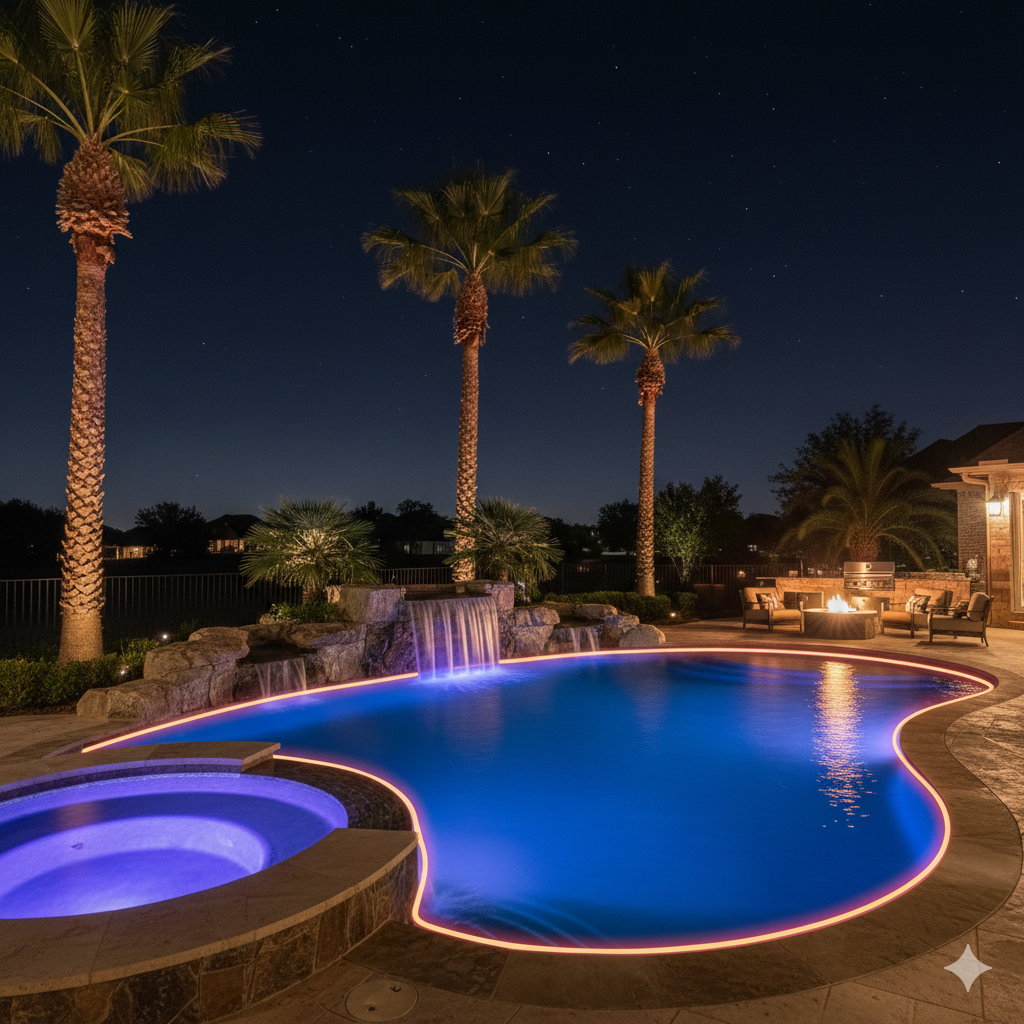
- Luxury residential pools where design and safety are priorities
- Commercial pools, hotel pools, and resort pools (liability, guest safety)
- Water features, fountains, and spa areas
- Pools with complex shapes or multiple water elements
- Starlight ceiling installations (indoor pools, pool houses)
- Architectural accent lighting around pools
- Situations requiring long cable runs from the light source
- Retrofit installations where adding LED niches is impractical
Interestingly, many high-end projects now combine technologies. LED might provide primary illumination while fiber optic creates accent lighting, perimeter effects, or dramatic starlight ceiling effects in covered pool areas. The DFW area has seen growing demand for these hybrid approaches—our Fort Worth LED lighting and Arlington LED lighting teams frequently collaborate with fiber optic specialists on luxury projects.
Maintenance and Longevity
LED Maintenance
LED pool lights are relatively low maintenance. The bulbs last 20,000–30,000 hours—about 10–15 years of typical use. When replacement is needed, the process involves:
- Turning off power to the pool light circuit
- Removing the fixture from the wall niche (usually one screw)
- Pulling the fixture above water level using the extra cord coiled behind it
- Replacing the bulb or entire fixture (some LEDs aren't bulb-replaceable)
- Reinstalling and testing
The process takes 15–30 minutes but should be done by a qualified technician to ensure proper sealing.
Additionally, LED fixtures have gaskets and seals that can degrade over time, especially in heavily chlorinated or saltwater pools. These may need periodic inspection and replacement ($65–$150).
Fiber Optic Maintenance
Fiber optic maintenance is simpler because the light source is outside the pool. When the bulb or laser unit needs service, you simply:
- Open the illuminator box (on your deck or in equipment area)
- Replace the bulb or service the unit
- Close the box
No entering the pool area, no dealing with seals, no concern about water intrusion. Traditional fiber optic bulbs last 3–7 years; modern laser units in 360° systems are rated for 30,000+ hours.
The fiber cables themselves are virtually maintenance-free. They don't corrode, don't have seals that fail, and can last decades with proper installation.
The Verdict: Which Should You Choose?
Choose LED pool lights if:
- Budget is your primary concern
- Your pool already has LED niches installed
- You want a straightforward, widely-available solution
- Maximum brightness per dollar is the priority
Choose fiber optic pool lights if:
- Safety is your top priority (zero electricity in water)
- You want premium color quality and visual impact
- You're installing a luxury or custom pool
- You own a commercial property (hotel, resort, apartment complex)
- You want design flexibility for creative lighting effects
- Easy, accessible maintenance matters to you
- You're adding lights to an existing pool without niches
For those who want the absolute best in pool lighting technology—the safest, most vibrant, most versatile option available—the 360° Laser Fiber Optic Lighting System represents the pinnacle of what's possible in 2026. It's an investment, but for luxury homes and commercial properties, the difference is immediately visible.
Frequently Asked Questions
Is fiber optic pool lighting safer than LED?
Yes, fiber optic is the safest pool lighting technology available. Fiber optic cables contain zero electrical current—only light passes through them. All electricity stays in the illuminator box located outside the pool. LED lights, while generally safe with proper installation, do have electrical components submerged in the water.
How much does fiber optic pool lighting cost compared to LED?
LED pool lights typically cost $700–$1,500 installed per light. Traditional fiber optic systems run $1,300–$1,700 installed. Premium 360° laser fiber optic systems start at $7,995 for residential and $9,995–$14,995+ for professional and commercial installations. While fiber optic costs more upfront, it offers lower maintenance costs and exceptional longevity.
Are fiber optic pool lights as bright as LED?
Traditional end-lit fiber optic systems are generally less bright than LED. However, modern 360° laser fiber optic systems deliver comparable or superior illumination with true 360-degree coverage and 3x better color saturation than LED. The technology has evolved dramatically from older fiber optic systems.
Can I add fiber optic lights to an existing pool?
Yes, fiber optic is often easier to add to existing pools than LED. The thin, flexible cables can be routed through small conduits without cutting large niches into the pool shell. The illuminator box is installed outside the pool, typically on the deck or in an equipment area within 10–12 feet of the pool (or farther with custom cable lengths).
How long do fiber optic pool lights last?
Traditional fiber optic bulbs last 3–7 years. Modern laser-powered systems like the 360° Fiber Optic Lighting System have laser units rated for 30,000+ hours—comparable to or exceeding LED lifespan. The fiber cables themselves can last decades with proper installation since they have no electrical components or seals to fail.
What is 360° fiber optic lighting?
360° fiber optic lighting is a revolutionary technology that uses laser power to illuminate fiber optic cables along their entire length with true 360-degree coverage. Unlike traditional fiber optics that emit light only from the cable ends, 360° systems provide uniform illumination with no dark spots. This patent-pending technology won Best New Product at LDI 2024.
Is fiber optic or LED better for commercial pools?
Fiber optic is generally preferred for commercial pools, hotels, resorts, and aquatic centers due to its superior safety profile (zero electricity in water reduces liability), easier maintenance access, and dramatic visual impact. Commercial properties often prioritize the safety and "wow factor" that fiber optic provides over the lower upfront cost of LED.
Do pool lights need to be installed during pool construction?
LED pool lights are much easier to install during construction since they require a niche built into the pool wall. Adding LED to an existing pool without niches requires significant renovation. Fiber optic lights are more flexible—while easier during construction, they can be added to existing pools more readily because the thin cables don't require large wall niches.
How many pool lights do I need?
For LED lights, most pools up to 30 feet need 1 light; longer pools typically need 2 lights positioned at opposite ends. For fiber optic systems, coverage depends on the system design—360° fiber systems can illuminate extensive areas from a single laser unit with 100–200+ meters of cable, offering more design flexibility than point-source LED fixtures.
Can I convert my pool from fiber optic to LED or vice versa?
Yes, conversions are possible. Converting fiber optic to LED typically costs $1,500–$1,800 for two lights and may reuse existing conduits. Converting LED niches to fiber optic is also possible, though the niche may remain visible. The best approach depends on your existing setup—consult with a pool lighting specialist to evaluate your options.
Ready to Transform Your Pool?
Whether you're exploring LED options or interested in the revolutionary 360° Laser Fiber Optic System, our experts can help you find the perfect solution for your pool.
Free consultation • Expert installation • Nationwide service