Custom Fiber Optic Lighting Solutions: The Complete Guide for Commercial & Architectural Projects
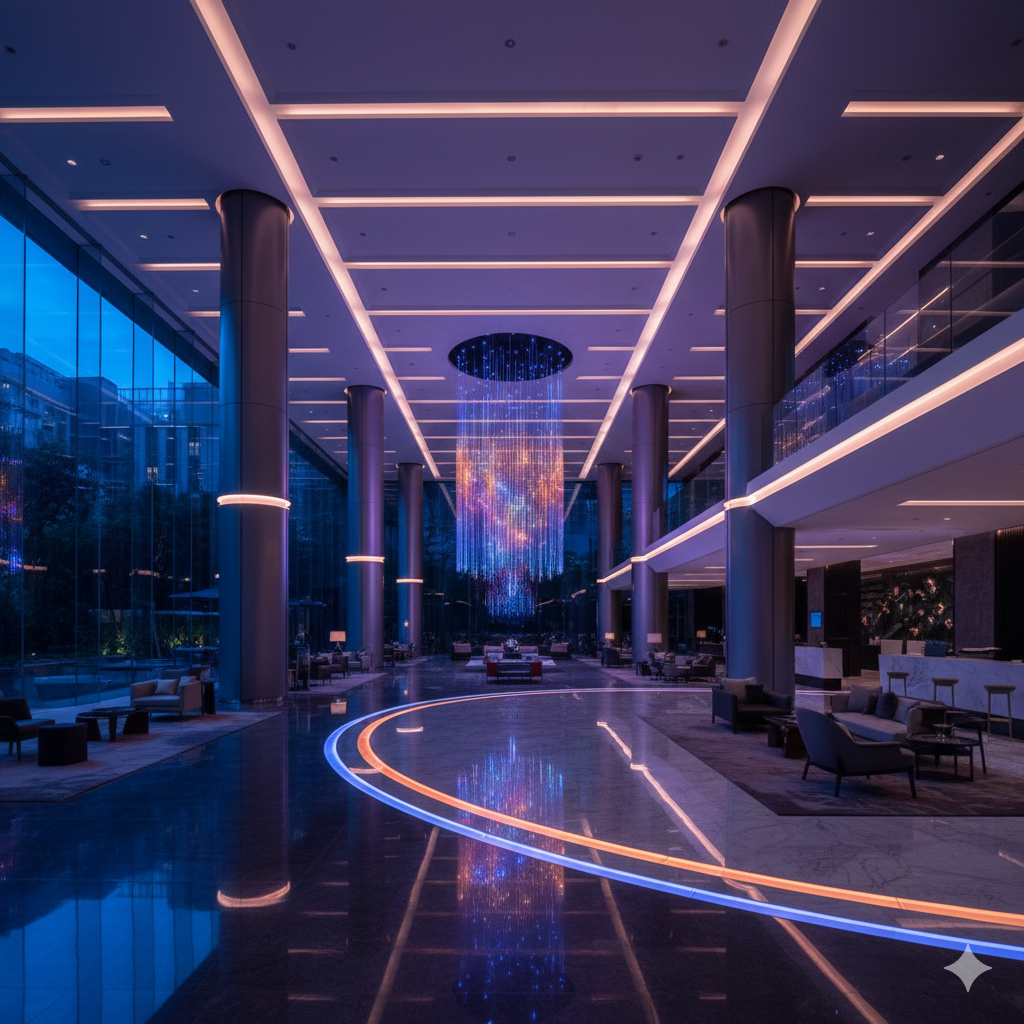
Custom fiber optic lighting solutions transform ordinary spaces into extraordinary experiences. Unlike off-the-shelf lighting products, custom systems are engineered specifically for your project—whether that's a hotel lobby, casino floor, architectural facade, or luxury residential installation.
But finding the right supplier for custom fiber optic lighting can be challenging. The market ranges from overseas manufacturers selling basic components to full-service providers offering turnkey solutions with design, engineering, and installation support. The technology itself has also evolved dramatically—today's laser-powered systems deliver performance that was impossible just a few years ago.
This guide covers everything you need to know about custom fiber optic lighting: how it works, what to look for in a supplier, typical costs, and how to evaluate whether fiber optic is right for your project. We'll also introduce you to the latest advancement in the industry—360° laser fiber optic technology—and explain why it's becoming the preferred choice for architects, designers, and commercial property owners.
Quick Answer: What Are Custom Fiber Optic Lighting Solutions?
Custom fiber optic lighting solutions are bespoke illumination systems designed and manufactured to meet specific project requirements. Unlike standard fixtures, custom systems include tailored cable lengths, specialized mounting hardware, project-specific color programming, and integration with building controls. Quality suppliers provide design consultation, 3D renderings, engineering specifications, professional installation, and ongoing support. For commercial projects, expect to invest $8,000–$50,000+ depending on scope, with premium 360° laser systems starting at $9,995 for professional installations.
Key Takeaways:
- Safety advantage: Zero electricity in fiber cables—safest option for pools, wet areas, and public spaces
- Design flexibility: Fiber can be bent, shaped, and run 200+ meters from a single light source
- Best technology: 360° laser fiber optic delivers 3x better color than traditional systems
- Full-service suppliers: Look for design, engineering, installation, and warranty support
- ROI factors: Energy savings up to 90%, minimal maintenance, 30,000+ hour lifespan
What Makes Fiber Optic Lighting "Custom"?
Standard fiber optic kits work for simple DIY projects, but commercial and architectural applications require custom solutions. Here's what distinguishes custom fiber optic lighting from off-the-shelf products:
Tailored System Design
Custom solutions start with your space, not a generic product catalog. A qualified supplier will assess your architecture, lighting goals, and technical requirements before recommending specific components. This includes calculating optimal illuminator placement, fiber cable routing, mounting solutions, and control system integration.
Precision-Cut Cable Lengths
Pre-packaged kits come with fixed cable lengths that rarely match real-world installations. Custom systems include cables cut to exact specifications—eliminating excess material, reducing installation complexity, and ensuring clean aesthetics. For projects requiring long runs, this precision is critical for maintaining consistent brightness.
Project-Specific Hardware
Mounting brackets, waterproof enclosures, conduit fittings, and termination fixtures are engineered for your specific application. A pool installation requires different hardware than a ceiling display or exterior facade. Quality suppliers provide marine-grade, UV-resistant, or fire-rated components as needed.
Programmed Color & Effects
Beyond basic RGB capability, custom systems can be pre-programmed with specific color palettes, branded colors, timed sequences, or DMX integration for complex lighting shows. This is especially important for hospitality venues, entertainment spaces, and corporate environments.
Professional Installation Support
True custom solutions include installation services or detailed guidance. This ensures warranty compliance, optimal performance, and code adherence. For commercial projects, this often includes coordination with general contractors, electricians, and building management.
Applications for Custom Fiber Optic Lighting
Fiber optic lighting excels in applications where traditional lighting falls short. The unique properties of fiber—no electricity at the light point, no heat generation, extreme flexibility, and long cable runs—open possibilities that LED and incandescent simply can't match.
Hotels, Resorts & Hospitality
Guest experience is everything in hospitality. Custom fiber optic systems create memorable environments in lobbies, pools, spas, restaurants, and bars. The ability to change colors and create dynamic effects allows venues to transform atmospheres for different events and times of day. Our commercial lighting services include specialized solutions for hotels and resorts nationwide.
Swimming Pools & Aquatic Facilities
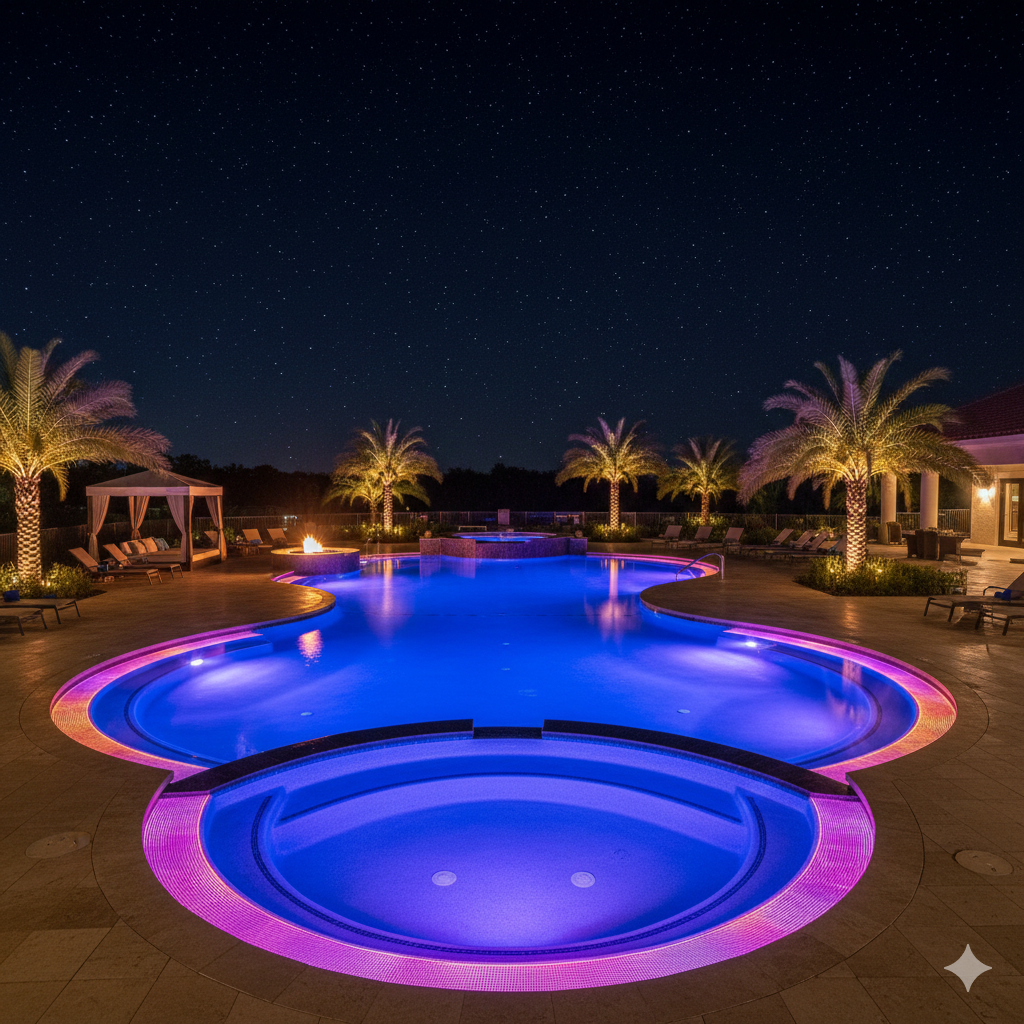
Fiber optic is the safest pool lighting available—zero electrical current enters the water. This eliminates shock hazards entirely, a critical consideration for commercial pools, water parks, and aquatic centers. For residential luxury pools, fiber optic delivers visual impact impossible with traditional underwater lights. Learn more about our specialized premium pool lighting solutions.
Architectural & Facade Lighting
Building facades, bridges, monuments, and public spaces benefit from fiber optic's flexibility and durability. Cables can outline architectural features, create linear accents, or integrate with structural elements. The remote light source means no visible fixtures or maintenance access points on the display surface.
Starlight Ceilings & Feature Displays
Home theaters, bedrooms, hotel suites, and entertainment venues use fiber optic to create stunning starlight ceiling effects. Thousands of individual fiber points can simulate a realistic night sky, complete with twinkling effects and color variations. American Starlight Ceilings specializes in these dramatic installations.
Casinos & Entertainment Venues
The entertainment industry demands lighting that creates excitement and atmosphere. Fiber optic systems integrate with DMX controllers for synchronized shows, respond to music, and create immersive environments that keep guests engaged.
Museums & Retail Displays
Heat-free, UV-free illumination makes fiber optic ideal for lighting sensitive artifacts, artwork, and merchandise. The light source stays remote while only safe, cool light reaches the display—protecting valuable items while providing beautiful presentation.
The 360° Fiber Optic Advantage: Next-Generation Technology
Traditional fiber optic systems emit light from the end of the cable only—limiting brightness, coverage, and design options. This technology, while still effective for some applications, hasn't fundamentally changed in decades.
360° Laser Fiber Optic Technology represents a revolutionary advancement. Using patent-pending laser illumination, this system makes the entire length of fiber cable glow with true 360-degree coverage—no dark spots, no uneven areas, just uniform brilliance throughout.
Why 360° Technology Wins:
- 3x Better Color Saturation — Laser-powered illumination delivers richer, more vibrant colors than any LED ribbon or traditional fiber system
- True 360° Coverage — Light emanates from the entire cable surface, not just the ends
- 200+ Meter Runs — Single light source can power extensive installations without brightness loss
- Zero Electricity in Cables — Inherently safe for water features, public spaces, and sensitive environments
- Award-Winning Innovation — LDI 2024 Best New Product Winner
- Trusted by Luxury Brands — Selected by Genesis for their 2026 GV80 vehicle campaign
This technology is available exclusively through 360 Fiber Lighting—the sole US distributor of this award-winning system.
How to Choose a Custom Fiber Optic Lighting Supplier
The difference between a successful installation and a disappointing one often comes down to supplier selection. Here's what to evaluate:
1. Technology & Product Quality
Not all fiber optic systems are equal. Ask about the light source technology (LED vs. laser), fiber cable quality (PMMA vs. glass), weatherproofing ratings (IP67/IP68 for outdoor use), and UL certification. Premium suppliers use commercial-grade components designed for 24/7 operation in demanding environments.
2. Design & Engineering Capabilities
Quality suppliers offer more than products—they provide expertise. Look for design consultation, photometric calculations, 3D renderings, and detailed engineering specifications. This upfront investment prevents costly mistakes during installation.
3. Installation Services
Does the supplier offer professional installation, or are you on your own? For commercial projects, certified installation teams ensure code compliance, warranty coverage, and optimal performance. Ask about their experience with your specific application type.
4. Project Portfolio & References
Review completed projects similar to yours. A supplier with extensive hotel experience may not be the best choice for an architectural facade project. Request references and, if possible, visit completed installations.
5. Warranty & Support
Commercial lighting is a long-term investment. Evaluate warranty terms (1-year minimum, 3-year preferred for premium systems), technical support availability, and parts replacement policies. The cheapest option often becomes expensive when problems arise.
6. Geographic Coverage
Can the supplier serve your location? National coverage matters for multi-site projects, ongoing support, and future expansions. 360 Fiber Lighting provides installation services across all 50 states, with experience in major markets including Dallas, Los Angeles, Las Vegas, Miami, Chicago, and Phoenix.
Custom Fiber Optic Lighting Costs: What to Expect
Pricing for custom fiber optic systems varies significantly based on project scope, technology choice, and installation complexity. Here's a realistic breakdown:
System Pricing
Factors Affecting Cost
- Coverage area: More square footage = more fiber cable and potentially multiple illuminators
- Technology choice: 360° laser systems cost more upfront but deliver superior performance
- Installation complexity: Retrofit projects typically cost more than new construction
- Environmental rating: Pool/outdoor installations require weatherproof components
- Control integration: DMX, building automation, and smart home integration add cost
- Professional installation: Certified installation ensures optimal results but increases investment
ROI Considerations
While fiber optic systems require higher initial investment than basic LED lighting, the long-term economics are compelling:
- Energy savings: Up to 90% reduction compared to traditional lighting
- Maintenance reduction: Light source is accessible; no underwater or hard-to-reach fixture service
- Longevity: Premium laser units rated for 30,000+ hours (10+ years typical use)
- Property value: Distinctive lighting increases perceived value for luxury properties
- Guest experience: For hospitality, memorable lighting drives reviews and return visits
The Custom Fiber Optic Project Process
Understanding the typical project workflow helps set expectations and ensures successful outcomes. Here's how professional suppliers approach custom fiber optic installations:
Phase 1: Consultation & Discovery
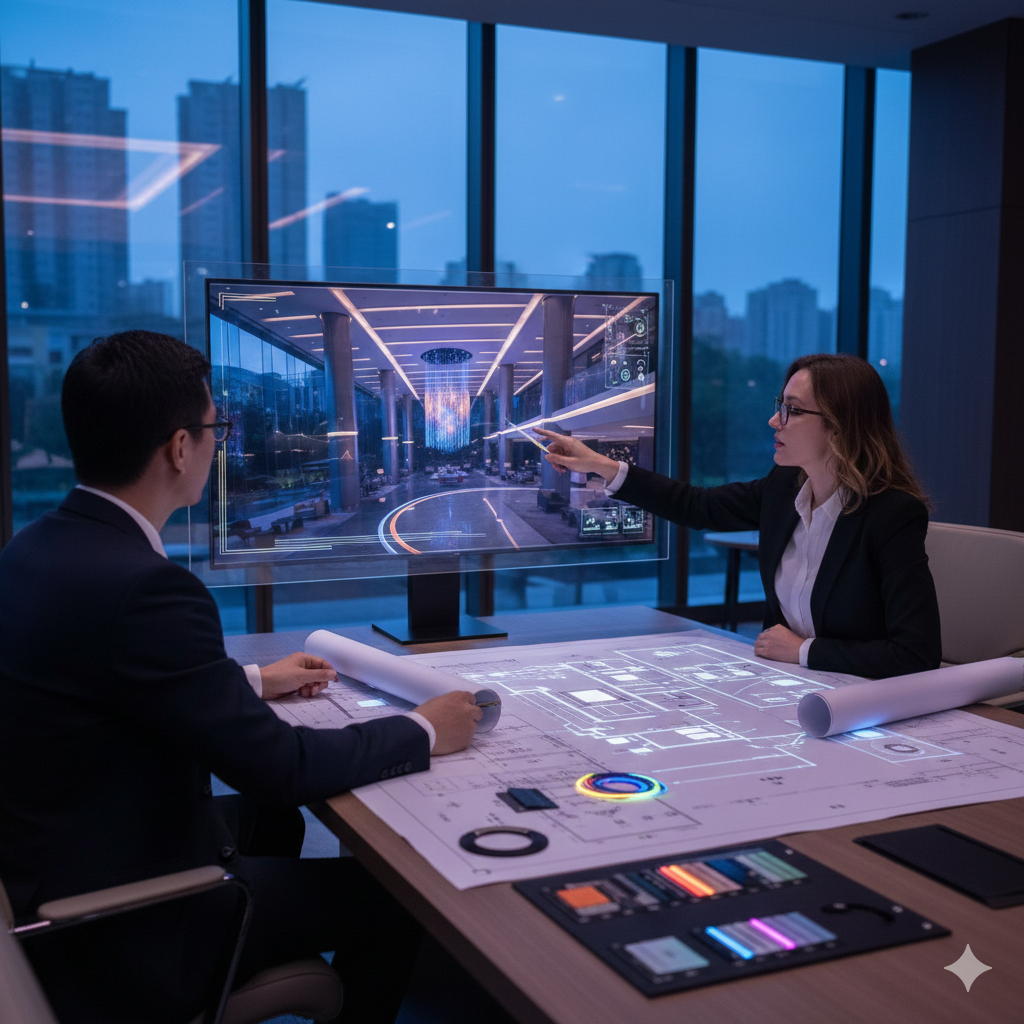
The process begins with understanding your vision, space requirements, and budget. Quality suppliers will ask about your goals, review architectural drawings, and discuss technical requirements. This phase typically includes a site visit for complex projects.
Phase 2: Design & Engineering
Based on discovery, the supplier creates a custom lighting plan. This includes equipment specifications, cable routing, mounting details, and 3D visualizations showing how the finished installation will look. You'll receive a detailed proposal with pricing.
Phase 3: Coordination & Permits
For commercial projects, this phase involves coordination with architects, contractors, electricians, and building management. Permits are obtained where required. The supplier ensures their system integrates with other building systems.
Phase 4: Installation
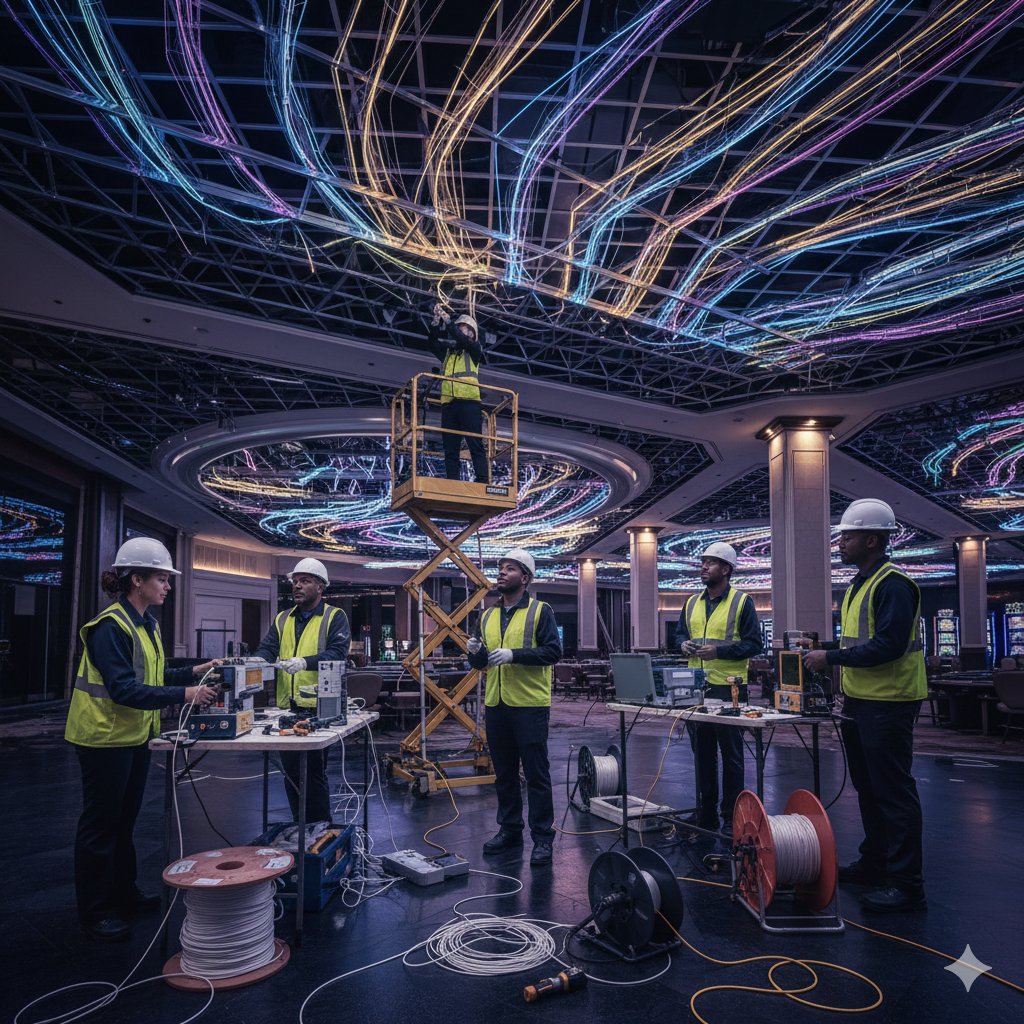
Certified technicians handle installation, including fiber placement, illuminator mounting, and system programming. Professional suppliers minimize disruption to business operations and can work during off-hours when needed.
Phase 5: Testing & Training
Comprehensive testing ensures everything operates correctly. Staff training covers system controls, programming changes, and basic troubleshooting. You'll receive complete documentation and warranty information.
Phase 6: Ongoing Support
Premium suppliers provide ongoing technical support, warranty service, and parts availability. Some offer maintenance contracts for commercial installations.
Working With Your LED & Lighting Network
Custom fiber optic lighting often works alongside other lighting technologies. For projects requiring both fiber optic feature lighting and conventional LED illumination, our network of specialized providers offers comprehensive solutions:
- Dallas LED Lights — Commercial LED solutions for the Dallas metro area
- Fort Worth LED Lights — LED lighting services in Fort Worth and Tarrant County
- Arlington LED Lights — Commercial lighting for Arlington businesses
- Plano LED Lights — LED installations throughout Plano and Collin County
- Irving LED Lights — Commercial LED lighting in Irving and Las Colinas
- Texas LED Lights — Statewide LED lighting solutions
- Wiedamark LED — Wholesale LED products and fiber optic components
For construction projects requiring modular or prefabricated structures, America Modular Buildings and Dallas Modular Structures provide turnkey solutions that can incorporate custom lighting from the design phase.
Frequently Asked Questions
What is custom fiber optic lighting?
Custom fiber optic lighting consists of illumination systems designed and manufactured specifically for your project requirements. Unlike off-the-shelf products, custom solutions include tailored cable lengths, project-specific mounting hardware, programmed color effects, and integration with your building systems. Professional suppliers provide design consultation, 3D renderings, engineering specifications, installation services, and ongoing support.
How much does custom fiber optic lighting cost?
Custom fiber optic lighting ranges from $1,500 for basic traditional systems to $50,000+ for large commercial installations. Premium 360° laser fiber optic systems start at $7,995 for residential packages and $14,995 for commercial systems. Factors affecting cost include coverage area, technology choice, installation complexity, environmental ratings, and control system integration.
Is fiber optic lighting safe for swimming pools?
Yes, fiber optic is the safest pool lighting technology available. The fiber cables contain zero electrical current—only light passes through them. All electrical components remain in the illuminator box, located safely outside the pool on the deck or in an equipment area. This eliminates any risk of electrical shock, making fiber optic ideal for commercial pools, water parks, and residential installations where safety is paramount.
What is 360° fiber optic lighting?
360° fiber optic lighting is a revolutionary technology that uses laser power to illuminate fiber optic cables along their entire length, not just the ends. Unlike traditional fiber optics that emit light from cable endpoints only, 360° systems provide true 360-degree illumination with no dark spots. This patent-pending technology delivers 3x better color saturation than LED ribbon and won Best New Product at LDI 2024.
How do I choose a fiber optic lighting supplier?
Evaluate suppliers based on technology quality (LED vs. laser, commercial-grade components), design and engineering capabilities (3D renderings, photometric calculations), installation services (certified technicians, nationwide coverage), project portfolio (experience with your application type), warranty terms (minimum 2-3 years for commercial), and ongoing support availability. Request references and review completed projects similar to yours.
How long do fiber optic lighting systems last?
Traditional fiber optic illuminator bulbs last 3–7 years with typical use. Modern laser-powered systems, including 360° technology, are rated for 30,000+ hours—equivalent to 15+ years of typical evening operation. The fiber cables themselves can last decades with proper installation since they contain no electrical components or seals that degrade over time.
Can fiber optic lighting be installed in existing buildings?
Yes, fiber optic lighting is often easier to retrofit than other lighting types. The thin, flexible cables can be routed through existing conduits, along surfaces, or through small penetrations without major construction. The illuminator box requires only a standard electrical connection and can be located up to 200+ meters from the display area with 360° systems. Professional installation ensures clean aesthetics in retrofit applications.
What's the difference between fiber optic and LED lighting?
LED lighting places electrical components at each light point, while fiber optic keeps all electricity at a remote illuminator. This makes fiber optic inherently safer for water features and sensitive environments. Fiber cables produce no heat, can run much longer distances from a single source, and offer greater design flexibility. 360° laser fiber optic delivers 3x better color saturation than LED ribbon. LED is typically less expensive for simple applications; fiber optic excels in specialized, high-impact installations.
Do you provide fiber optic lighting installation nationwide?
Yes, 360 Fiber Lighting provides professional installation services across all 50 states. We serve major markets including Dallas, Houston, Los Angeles, Las Vegas, Miami, Chicago, Phoenix, Atlanta, New York, and hundreds of other cities. Our certified installation teams coordinate with local contractors and building management to ensure seamless project execution regardless of location.
What warranty comes with custom fiber optic systems?
Warranty coverage varies by supplier and system type. 360° Laser Fiber Optic systems include 1-year warranty on residential packages, 2-year warranty on professional systems, and 3-year warranty on commercial installations. All warranties cover defects in materials and workmanship. Extended warranty options and commercial maintenance contracts are available for projects requiring additional coverage.
Ready to Explore Custom Fiber Optic Lighting?
From initial concept to completed installation, our team guides you through every step. Discover how 360° laser fiber optic technology can transform your space.
Free consultation • Custom design • Nationwide installation